
UPDATED: August 13, 2025
By Dr. Ariyana Love
Pine needle tea is highly beneficial to health. Classified as an “essential food,” pine needles are safe and favorable to include in your daily diet.
Indigenous cultures have traditionally used pine and spruce tips to detox parasites in the spring and to prevent scurvy in the winter. Finnish people used the inner lining of the bark of the pine tree to sustain themselves during hard times.
Pine has a wide variety of remedial uses and it’s one of the world’s most potent superfood, unmatched by any other. Pine needles treat pain and trauma of all kinds. They repairs DNA damage in cells and kill all variety’s of parasites, making it one of nature’s superior antidotes.
Please listen to the many remedial benefits of using pine needles in a podcast I did in 2021.
Pine Needle Tea Remedies with Dr. Ariyana Love
Pine Needle Tea Preparation
When picking your pine needles, always take between 3-5 inches from the ends of the branches. The most desirable needles are from branches that get the most sunlight.
Rinse your pine needles in water. The initial splash of hot water will sterilize your needles. If you’re still concerned about purity, you can rinse them in a 50/50 solution of water and vinegar for a minute and a half, then rinse them again in only water.
You can alternate between pine and spruce needles to vary your nutrients or prepare them together.
Water is a soluble and enables the extraction of vital nutrients from pine needles. Hot, boiling water stimulates the release of vitamin C, which is a significant nutrient found in pine needles. It also stimulates the release of other beneficial compounds such as vitamin A, flavonoids, shikimic acid, and various amino acids like arginine and proline.
Dr. Love’s FRESH Pine Needle Tea
Bring water to a full boil and deposit your needles into the pan. Ensure your needles are fully submerged in water to maximize extraction. Reduce heat to a simmer and immediately cover your pot with a lid to trap in the essential oils and prevent them from evaporating out. This way, the oils trickle back down into your water. Continue simmering your pine needles for 15-20 minutes, maximum. Do not simmer longer than 20 minutes, or the delicate nutrients will begin to degrade. Make sure no moisture escapes the lid; if it does, it’s a sign the temperature is too high.
Finally, remove from heat, strain, and let cool. Add raw honey or organic stevia to taste.
Your pine needle tea should be a cloudy white colour. If it’s brown, you know that the heat was too high or you cooked it for too long. Overcooking pine needles removes critical nutrients, leaving only the tannins. It’s not dangerous unless you consume a lot of high-tannin pine needle water over time, as it can be hard on your kidneys and liver.
If you can taste the vitamin C, then you know the Shikimate (antidote) is retained within your tea.
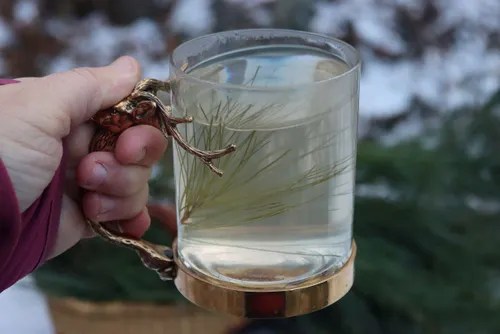
Drink 2-3 cups per day of pine needle tea. Make sure to consume pine tea twice per day, about 6 hours apart. This way, you keep the Shikimate actively working within your body for extended hours during the day, increasing protection against spike protein transmission.
If you have additional needles, you can preserve them fresh by storing them in your freezer. Pull them out and let them defrost when you desire to make another pine needle tea batch.
DRIED Pine Needle Tea
Of course, fresh is always better than dried and will have a higher nutrient content. But dried pine needles are also refreshing, beneficial and easy to store.
One kilo of dried pine or spruce needles will make about 400 cups of pine needle tea.
Use about 1-2 heaping teaspoons of dried pine needles for each cup of water. Bring water to a boil, then pour it over your needles. Cover immediately and let it steep for 15 minutes. You can use this as a quick technique for both dried and fresh needles.
If you wish to order Pine Needle Essential Oil or wish to review other Associate products of Dr. Love, visit Dr. Love’s Apothecary website.
Read more about the antidotal properties of shikimic acid, a key ingredient in pine needles via my Substack article entitled, “Antidotal Properties of Shikimic Acid in Pine Needles.”
Consider subscribing to my Substack today, to review my Pine Needle Kombucha Tea recipe and other unique health remedies today!
Photo credits: Pine needle tea photo credits go to homesteader, Ashley Adamant.
 Ariyana Love